
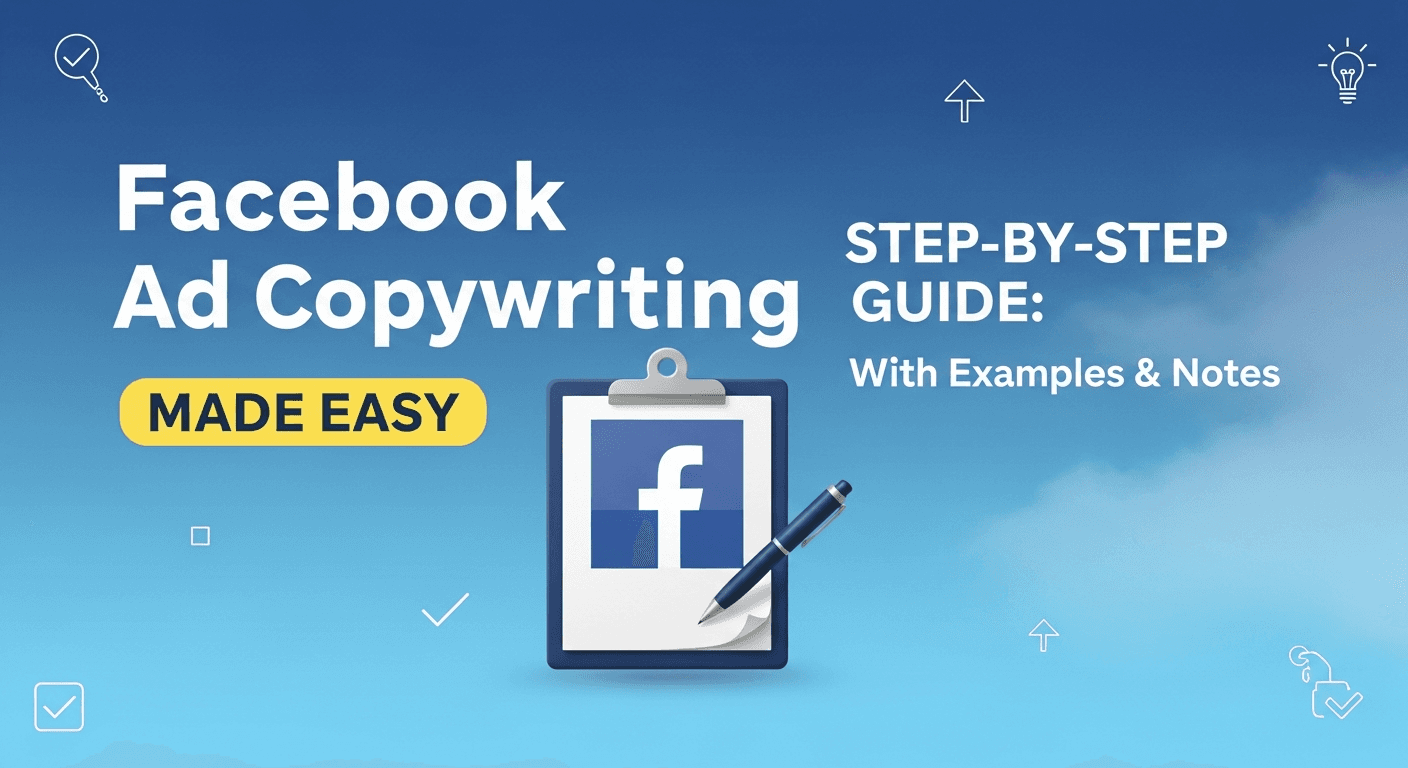
Facebook Ad Copywriting Made Easy: Step-by-Step Guide With Examples & Notes
Imagive Content Team
January 21, 2026
Facebook remains one of the most powerful platforms for demand generation, but writing ad copy that consistently performs is still a challenge for many teams. With limited attention spans and endless competing creatives, the margin for error is small. At Imagive.ai, we see brands struggle not because Facebook ads do not work, but because Facebook ads copywriting is often treated as guesswork rather than a structured process.
This guide simplifies Facebook ads copywriting into clear steps. We explain how effective copy works, where most teams go wrong, and how Imagive.ai helps marketers create, test, and refine ad copy for Facebook faster without losing control over messaging or performance.
What Is Facebook Ads Copywriting?
Facebook ads copywriting is the process of crafting text that appears in Facebook ad formats, including primary text, headlines, and descriptions. Unlike search ads, Facebook ads interrupt scrolling behaviour, which means copy must create relevance instantly.
Effective Facebook ads copy focuses on:
- Capturing attention within the first line
- Communicating value quickly
- Creating emotional or practical relevance
- Encouraging a clear next action
At Imagive.ai, we treat Facebook copy as part of a system, not a standalone creative task.
Why Is Facebook Ads Copywriting Different From Other Platforms?
Facebook ads operate in a discovery environment rather than an intent-led one. Users are not actively searching. They are scrolling.
This changes how ad copy for Facebook performs.
Platform
User Mindset
Copy Focus
Google Ads
High intent
Precision and relevance
Facebook Ads
Passive discovery
Attention and curiosity
Existing relationship
Depth and persuasion
Because of this, Facebook copy must earn attention before it can sell.
What Are the Core Elements of Facebook Ads Copy?
Every Facebook ad typically includes three copy components.
Copy Element
Purpose
What to Optimise
Primary Text
Stops the scroll
Opening hook and relevance
Headline
Reinforces value
Clarity and benefit
Description
Adds context
Trust or urgency
Strong Facebook ads copywriting ensures these elements work together rather than repeat the same message.
How Do You Write Facebook Ad Copy Step by Step?
Step 1: Start With Audience Awareness
Before writing, we identify:
- Who the audience is
- What problem they care about
- What stage of awareness they are in
Copy written without audience context rarely performs well.
Step 2: Lead With a Scroll-Stopping Hook
The first line of ad copy for Facebook determines whether users read further.
Effective hooks often:
- Call out a pain point
- Challenge an assumption
- Highlight a benefit
Step 3: Communicate One Clear Value
Each ad should focus on one primary message. Multiple ideas reduce clarity.
Step 4: Add Light Proof or Reassurance
This can include:
- Social validation
- Outcomes
- Risk reduction
Step 5: End With a Clear Action
Every Facebook ads copy should guide users toward a next step, even if it is subtle.
What Are Examples of Effective Facebook Ad Copy?
Goal
Sample Primary Text Style
Key Focus
Awareness
“Most brands waste ad spend without knowing why.”
Curiosity
Consideration
“Here’s how high-performing teams improve ad results faster.”
Education
Conversion
“Build Facebook ads that convert without creative guesswork.”
Outcome
At Imagive.ai, we generate multiple variations like these to support structured testing rather than relying on a single idea.
What Are Common Mistakes in Facebook Ads Copywriting?
Many performance issues stem from repeatable errors.
- Writing generic openers that fail to stop scrolling
- Overloading ads with multiple messages
- Ignoring audience awareness stages
- Reusing the same Facebook ads copy across campaigns
- Treating AI output as final without review
Avoiding these mistakes often delivers immediate performance improvement.
How We at Imagive.ai Simplify Facebook Ads Copywriting
At Imagive.ai, we built our platform to help teams systemise Facebook ads copywriting rather than rely on intuition alone.
Our approach helps marketers:
- Generate multiple ad copy for Facebook variations aligned to intent
- Test hooks, value propositions, and CTAs faster
- Maintain consistency across campaigns and audiences
- Use AI as a support layer, not a replacement for strategy
We focus on clarity, speed, and performance intelligence, enabling teams to spend less time drafting and more time optimising.
How Should Teams Use AI for Facebook Ads Copy?
AI works best when used intentionally.
A practical workflow looks like this:
- Define audience and campaign goal
- Generate multiple copy variations using AI
- Select options aligned with strategy
- Launch controlled tests
- Refine based on performance data
This process allows AI to accelerate execution while humans control direction and learning.
Conclusion
Strong Facebook ads copywriting is not about clever words. It is about relevance, structure, and continuous testing. When teams simplify the process and treat copy as a system, performance improves naturally.
At Imagive.ai, we help marketers create better Facebook ads copy by combining AI-assisted generation with performance-focused workflows. Our platform supports faster testing, clearer messaging, and smarter optimisation, helping teams build Facebook ads that work consistently at scale.
If your team wants to make ad copy for Facebook easier to create and easier to optimise, Imagive.ai helps you turn complexity into clarity.
FAQs
Q1. What is Facebook ads copywriting?
It is the practice of writing text for Facebook ads that captures attention and drives action.
Q2. How long should Facebook ad copy be?
It should be as long as needed to communicate value clearly, but short enough to maintain attention.
Q3. Does Facebook ads copywriting differ by funnel stage?
Yes. Awareness, consideration, and conversion stages require different messaging approaches.
Q4. Can AI help write Facebook ads copy?
Yes, AI helps generate and test variations faster when guided by human strategy.
Q5. What should be tested first in Facebook ads copy?
Opening hooks, value propositions, and calls to action are the most impactful elements.
Q6. How often should Facebook ad copy be refreshed?
Regularly. Ongoing testing prevents fatigue and improves performance over time.
Related Articles
See all →
AI
Step-by-Step Guide: Using Blog Writing Tools to Create SEO-Friendly Posts
4 min read
ImagiveAi
How Imagive AI Supercharges SEO Blog Writing for Marketers
5 min read
ImagiveAi
Writing Winning Facebook and Instagram Ads with Imagive AI
7 min read

ImagiveAi
How Imagive.ai Helps You Write and Test Winning Ads in Minutes, Not Days
4 min read
ImagiveAi
The ROI of AI-Generated Ad Creatives: How Performance Marketers Can Scale Faster
4 min read