
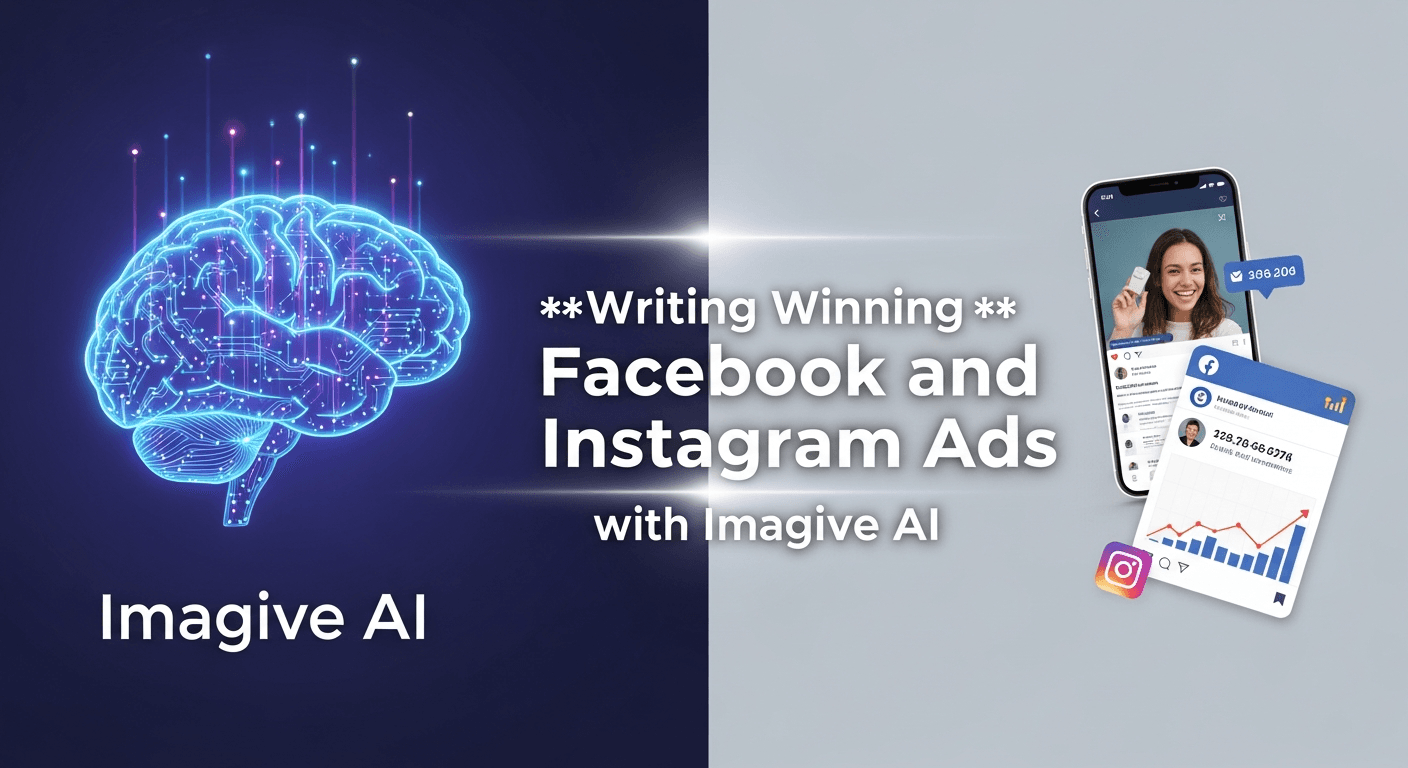
Writing Winning Facebook and Instagram Ads with Imagive AI
Imagive Content Team
January 21, 2026
In today’s digital landscape, social platforms have become central to brand visibility and customer engagement. Facebook and Instagram remain two of the most powerful channels for performance-driven campaigns, enabling precise audience targeting and measurable ad outcomes. Yet the basic truth is simple: even the best audience segmentation and budget strategy cannot compensate for weak creative. At the heart of every high-performing campaign lies compelling, clear, and persuasive ad copy that resonates with audiences instantly.
This is where social media copywriting becomes both an art and a science. Crafting effective messages for Facebook and Instagram ads requires understanding behavioural insights, emotional triggers and platform dynamics alike. More than merely writing headlines and calls to action, social media copywriting must align with user context, expectations and intent. For many marketers, producing ad copy that consistently drives clicks, conversions and brand affinity can feel like an uphill battle.
The rapid emergence of artificial intelligence is reshaping how marketers approach creative generation. AI copywriting software is no longer a distant concept. It is now a practical tool that helps teams generate, optimise and test multiple ad concepts faster than ever before. With AI-driven support, marketers can focus less on rewriting and more on refining strategic choices. This blog explores the principles of crafting winning Facebook and Instagram ads and how AI tools help streamline and elevate the creative process.
Understanding the Core of Social Media Copywriting
Effective copy begins with clarity in intent. When writing for platforms like Facebook and Instagram, the audience’s frame of mind is critical. These are social platforms where users often multitask, scroll quickly, and form judgments in seconds. Strong social copy must interrupt this pattern in a way that feels seamless, relevant and engaging.
At the core of social media copywriting is a fundamental understanding of the audience and their motivations. This involves identifying their pain points, aspirations and behavioural triggers. What problem is the ad solving? What emotion will motivate the next click? The answers to questions like these inform the language, rhythm and structure of the message.
High-conversion ad copy does not rely on length. In fact, shorter messages often perform better because they respect users’ limited attention spans. Yet brevity must be balanced with meaning. Each word in a high-performing ad serves a purpose: to inform, to persuade or to move the reader toward action.
Principles of Effective Facebook and Instagram Ad Copy
1. Lead with a Relevant Hook
The opening line must resonate immediately. Facebook and Instagram users decide within milliseconds if they will engage. A hook that speaks directly to a known desire, whether it is time savings, social proof, or value, sets the stage for the rest of the message.
2. Emphasise Clear Benefits
Benefits, not features, drive clicks. The best ad copy clearly articulates what the user gains. For example, instead of “Our tool improves productivity,” a benefit-driven message might state, “Save hours of work with smarter automation.”
3. Use Conversational Yet Purposeful Tone
On social platforms, copy that feels too formal or salesy can create resistance. Conversational language builds rapport without sacrificing clarity. At the same time, purpose must guide every sentence.
4. Include a Strong Call to Action
A compelling CTA clarifies what happens next. Users respond to specific, action-oriented prompts like “Get Started Today,” “See It in Action,” or “Claim Your Offer.” Effective CTAs minimise ambiguity and streamline decision-making.
5. Align Copy with Visuals
Words and visuals are not separate. The image or video sets the stage, and the copy must reinforce the narrative. When language and visuals speak in harmony, the combined impact is greater than the sum of its parts.
Common Challenges in Manual Ad Copy Creation
Many teams find themselves constrained by time, creative blocks, or inconsistent performance. Some common obstacles include:
- Spending too much time crafting and refining versions
- Difficulty generating enough variation for testing
- Challenges maintaining brand voice across campaigns
- Inability to align messaging with audience micro-segments
These challenges slow down campaign velocity and often result in repetitive or uninspiring copy that underperforms.
This is where modern AI capabilities are reshaping workflows.
How AI Enhances the Ad Copywriting Process
At its core, ai copywriting software accelerates ideation while maintaining strategic alignment. By analysing historical copy, audience behaviour and proven engagement patterns, AI tools generate copy concepts that reflect real performance signals.
Speed Without Sacrificing Quality
AI helps produce multiple ad variations in minutes. Teams can generate alternatives with different hooks, benefit emphases or calls to action, enabling fast testing and optimisation.
Data-Informed Creativity
Instead of guessing what works, AI tools draw on patterns extracted from high-performing copy across categories and platforms. This contextual awareness elevates the baseline quality of suggestions.
Consistent Brand Voice at Scale
As campaigns scale across audiences and platforms, maintaining voice consistency becomes challenging. AI models trained on brand guidelines can help ensure that even automated outputs stay on-message.
Applying AI to Facebook and Instagram Ad Creation
When using AI tools, marketers should approach output as a starting point rather than a final product. AI-generated copy benefits from human refinement. The most effective process combines machine speed with human judgement.
Start by providing AI with clear inputs: target audience insights, core benefits, tone preferences and performance history where possible. Then use the generated variations to identify patterns that resonate, such as:
- Narrative-driven hooks
- Value statements that perform well
- CTAs that convert effectively
- Emotional cues that match audience segments
Testing remains essential. AI helps generate multiple testable variants, but real-world performance data determines what works. Over time, this iterative cycle of generation, testing and optimisation leads to stronger creative systems that improve results.
Best Practices for Integrating AI into Your Workflow
To fully benefit from AI-assisted copy, teams should establish structured processes:
- Define clear KPI objectives before generating copy
- Use AI to create variations at scale
- Set up robust A/B testing frameworks
- Refine AI outputs through human editorial review
- Analyse performance data to inform new inputs
This hybrid approach ensures that AI complements strategic thinking rather than replacing it.
Conclusion
Winning on platforms like Facebook and Instagram demands creativity, clarity and speed. Traditional copywriting processes cannot always keep pace with the demands of frequent testing and rapid iteration. AI-driven systems have changed this landscape, enabling teams to produce compelling ad copy faster, test more variations and derive deeper insights from performance data.
For organisations looking to streamline their social media advertising workflows, modern copy writing tools empower faster generation of high-quality messages that align with brand goals and audience expectations. When combined with strategic testing and optimisation, AI-powered ad copy generation becomes a competitive advantage.
Imagive.ai exemplifies the next generation of social media copywriting and AI copywriting software by helping teams automate ideation, refine output and scale creative performance across Facebook and Instagram campaigns. With AI assistance, brands can focus more on strategy and less on repetitive content production, accelerating performance and results in a crowded social landscape.
Ready to Scale High-Performing Social Ads Faster?
If your team is spending hours rewriting variations, struggling to maintain consistency, or falling behind on testing cycles, it is time to rethink how ad copy is created. Imagive.ai helps brands generate, test and optimise Facebook and Instagram ad copy at speed, using AI trained on high-performing campaigns.
Move beyond manual guesswork and fragmented workflows. Start building social ads that convert faster, scale smarter and perform consistently.
Explore Imagive.ai and experience how AI-powered copywriting transforms social advertising execution.
FAQs
Q1. What is social media copywriting and why does it matter for ads?
Social media copywriting focuses on creating short, persuasive messages designed for platforms like Facebook and Instagram, where attention spans are limited. Strong copy improves engagement, click-through rates, and overall ad performance.
Q2. How do AI tools improve Facebook and Instagram ad copy?
AI tools analyse high-performing patterns and user behaviour to generate multiple ad variations quickly. This helps marketers test ideas faster, refine messaging, and improve results without manual rewriting.
Q3. Is AI copywriting software suitable for performance marketing?
Yes. Modern AI copywriting software is built to support performance goals by generating benefit-driven headlines, strong CTAs, and audience-aligned messaging optimised for conversions.
Q4. Can AI-generated ad copy match a brand’s tone and voice?
When guided with clear inputs, AI tools can maintain consistent brand tone across campaigns. Human review ensures final outputs remain aligned with brand identity and messaging standards.
Q5. How are copy writing tools used for A/B testing ads?
Copy writing tools help create multiple ad variants quickly, allowing marketers to test different hooks, benefits, and CTAs. Performance data then guides optimisation decisions.
Q6. Who should use AI-powered tools for social ad copy?
AI-powered copy tools are ideal for performance marketers, growth teams, founders, and agencies running frequent Facebook and Instagram campaigns who need speed, scale, and consistency.
Related Articles
See all →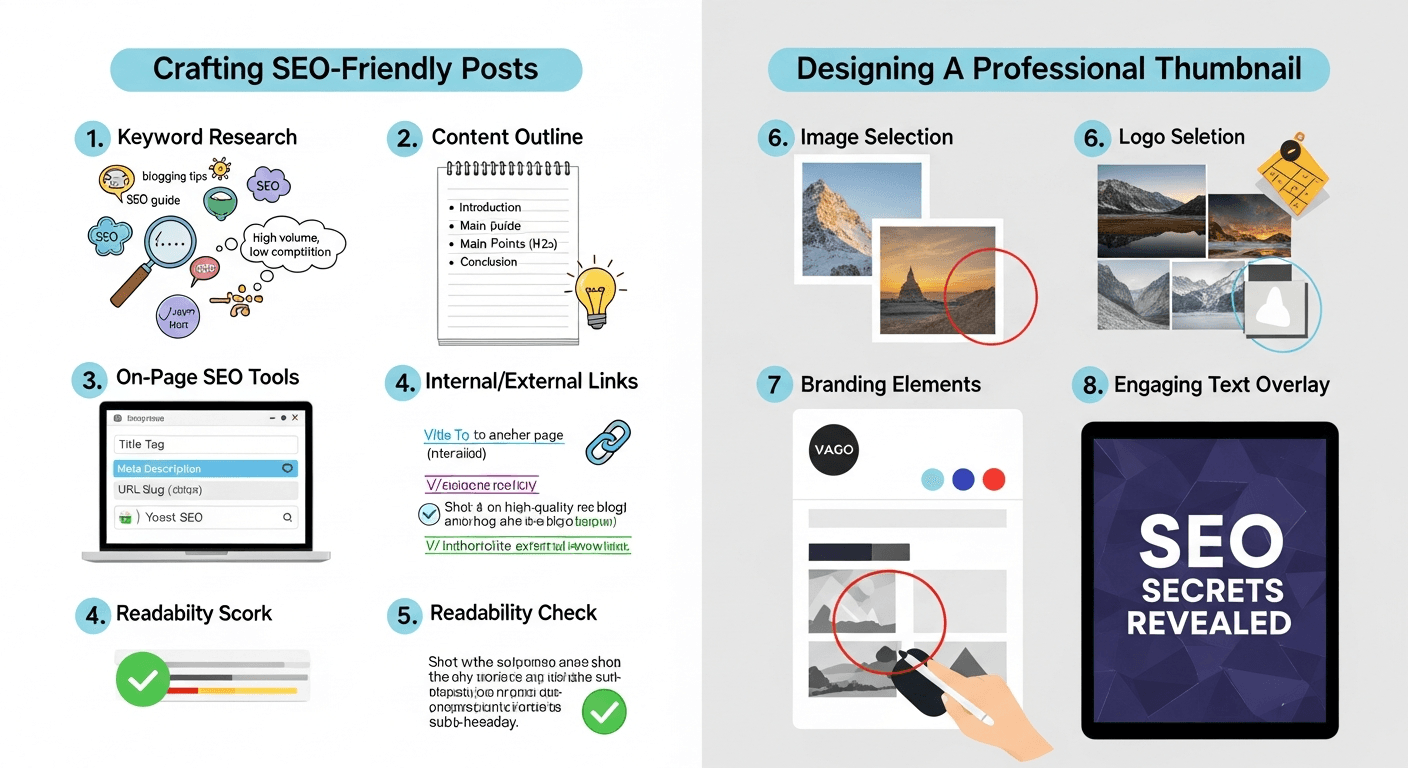
AI
Step-by-Step Guide: Using Blog Writing Tools to Create SEO-Friendly Posts
4 min read
ImagiveAi
How Imagive AI Supercharges SEO Blog Writing for Marketers
5 min read

ImagiveAi
How Imagive.ai Helps You Write and Test Winning Ads in Minutes, Not Days
4 min read
ImagiveAi
The ROI of AI-Generated Ad Creatives: How Performance Marketers Can Scale Faster
4 min read

ImagiveAi
Tired of Being Skipped? The 2026 Guide to UGC Ads People Love Watching
5 min read